Where the Rotor Meets the Red Carpet: Britain's Most Coveted Landing Sites
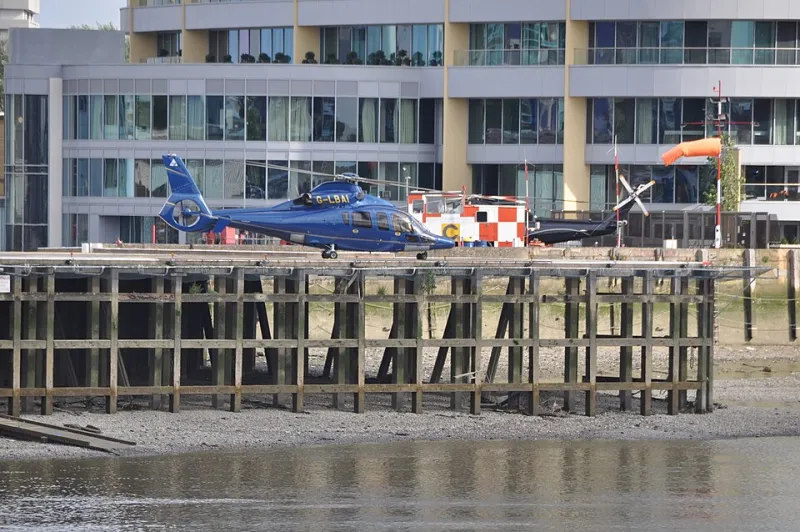
Photo: Lewis Clarke , CC BY-SA 2.0, via Wikimedia Commons
There is a particular kind of composure that settles over a traveller who has removed themselves from the road entirely. It is not simply the absence of congestion; it is the sense of arriving through a different door — one that opens onto a lawn, a paddock or a riverbank rather than a kerb. Access to that door is what distinguishes a good charter from a great one, and it depends almost entirely on the landing site.
A Brief Word on Permission
Unlike the Continent, where helipads punctuate motorway service stations and hotel rooftops with cheerful regularity, Britain treats the landing of a helicopter as an event requiring consent. Landowner permission is the first requirement; prior permission required (PPR) status, noise abatement procedures and, at some sites, local authority conditions follow. Even a large private estate cannot simply be landed upon without arrangement, and the premier venues guard their landing rights with the same care as their dining reservations.
Understanding this landscape is the practical heart of luxury helicopter travel in the United Kingdom. It is also, happily, the part best left to a charter operator with established relationships.
London Heliport: The Capital's Front Door
Opened in 1959 on the south bank of the Thames at Battersea, London Heliport remains the only licensed heliport within central London and the natural terminus for any discerning arrival by air. Its position is its genius: the City, Mayfair, Westminster and the South Bank are all within a short chauffeured drive, and the approach along the river, with the Palace of Westminster and the London Eye gliding beneath the aircraft, remains one of the more affecting ten minutes in British aviation.
Slots are finite and must be booked rather than assumed, with a handling fee structure that reflects the address. Operators will typically coordinate the landing slot, the passenger manifest and the onward car as a single arrangement. For those travelling onward to private aviation, the connection to Farnborough or Biggin Hill is straightforward, though it is worth allowing generous margin on the ground.
Racecourses: Landing Among the Paddock
Britain's racecourses have cultivated helicopter access with unusual sophistication. Ascot, Cheltenham, Newbury, Aintree and Goodwood all accommodate helicopter arrivals at their principal fixtures, with landing zones situated within easy reach of the enclosures. The effect is transformative: the traffic that defines a race day for most attendees simply does not exist, and one arrives at the rails having spent twenty minutes in the air rather than two hours in a queue.
At the premier meetings — Royal Ascot, the Cheltenham Festival, the Grand National — landing slots are allocated months in advance and demand comfortably exceeds supply. Bookings are usually made as a package, with the operator securing the slot, the aircraft and the return leg together. It is not a market in which to leave matters late.
Country Estates and Sporting Grounds
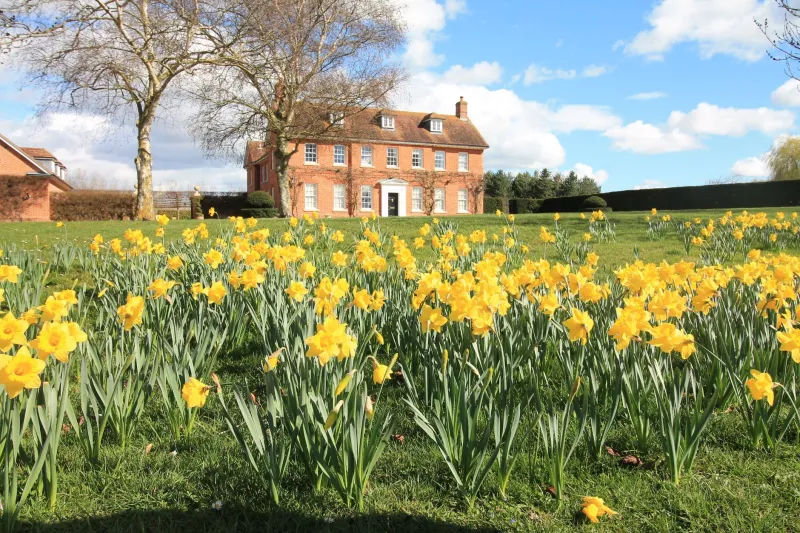
Beyond the racecourse, the most desirable landing sites are the private ones. Great houses hosting weddings, shoot lunches and milestone celebrations will often permit a landing on a designated lawn, subject to the landowner's consent, an assessment of the surface and undulating ground, and confirmation that no livestock, irrigation equipment or event infrastructure obstructs the approach. Hotels such as Cliveden, the Gleneagles estate in Perthshire, and a number of country house properties in the Cotswolds and the Home Counties maintain established arrangements.
Stately homes open to the public will generally consider a landing request only outside opening hours, and some decline altogether on grounds of conservation. A courteous, well-documented approach — made through the operator, never the visitor — is the correct method.
Sporting and Event Landing Zones
Silverstone, Goodwood and a handful of major stadium and festival sites maintain temporary or event-specific landing zones. These are governed less by permanent infrastructure than by the event organiser's safety plan, and they reward early enquiry. The same applies to festival sites and to the larger country shows, where helicopter arrivals have become a recognised alternative to the car park.
The Seamless Chain: Door to Helipad
The luxury of a helicopter charter is cumulative. It begins with a chauffeur collecting from the door and ends with a car waiting at the far pad, engines still warm. Between those points, the operator manages weather decisions, slot timings, baggage limits — typically a soft bag per passenger is prudent — and security arrangements at major events.
It is worth insisting on a single point of contact throughout, and on written confirmation of the landing site itself, not merely the town. The difference between a designated helipad and a speculative field is considerable, and it is rarely discovered until the day.
Etiquette in the Air and on the Ground
Discretion remains the governing virtue. Flight paths over residential areas should follow the operator's standard noise abatement routing; arrivals at private estates should be timed so as not to coincide with a neighbour's garden party. Passengers are asked to keep to marked areas, to approach the aircraft only when instructed, and to dress for the conditions — rotor wash is unforgiving of loose scarves and light hats.
Photography, where permitted, is best arranged in advance rather than improvised on the apron.
Planning for 2026 and Beyond
The pattern of the current year is clear: demand for access to the most desirable landing sites has continued to outpace capacity, particularly at Battersea and at the marquee race fixtures. Our advice for 2026 and into 2027 is consistent — decide the destination first, secure the landing rights second, and treat the aircraft as the final piece rather than the first.
Approached in that order, the experience acquires its proper character: not a flight with an address attached, but an arrival conceived in its entirety, from the front door of one house to the front door of another.