The Discreet Companion: A Practical Charter Guide to Flying with a Dog
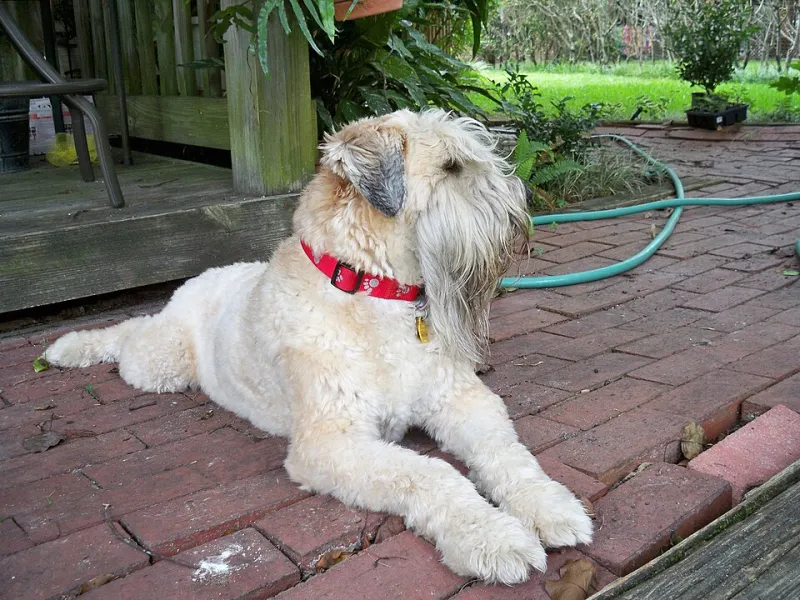
Photo: SusanSmithGSU, CC BY-SA 3.0, via Wikimedia Commons
Flying with a dog is not a novelty to be indulged; it is a logistical question that deserves the same care as luggage, timing and landing permissions. For UK owners, a private helicopter can be a considerate way to move a dog between London and the countryside, or between one country house and another. It can also be stressful for the animal if the arrangements are improvised. The difference lies in preparation.
Operator policy and paperwork
Begin with the operator, not the carrier. Most UK charter operators accept dogs at their discretion, but policies vary by aircraft type, crew and insurance. Ask early: how many dogs, what size and breed, and whether the animal will travel in the cabin. In light helicopters there is rarely a separate hold, so the dog will usually be in the cabin with the passengers. Confirm whether the operator requires a health declaration, vaccination record or details of the animal's temperament. For domestic UK flights there is no passport control, but the operator may still apply its own conditions. Assistance dogs should be discussed separately, with the operator's written confirmation.
Carrier, harness and restraint
A dog should never travel loose in a helicopter. The cabin is compact, the rotors are loud and the pilot needs a clear sterile area. Use either a soft-sided carrier that can be secured to a seat or floor point, or a crash-tested harness attached to a suitable restraint. The carrier should be large enough for the dog to stand, turn and lie down, but not so large that it obstructs the cabin. Line it with a familiar blanket and an absorbent pad. Acclimatise the dog to the carrier at home in the days before the flight. Do not sedate the animal unless a vet has specifically advised it; sedation can affect balance and breathing, and it is not a substitute for good planning.
Noise, vibration and cabin comfort
Helicopters are noisy and vibratory, and a dog's hearing is more sensitive than a human's. Ask the operator about ear protection designed for dogs, and introduce it before the day. Keep the cabin ventilated and monitor the dog for signs of overheating or distress. Feed a light meal well before departure rather than a heavy one immediately beforehand, and offer water at the landing site. A short flight is usually easier than a long one; if the journey is lengthy, plan a comfort stop rather than pressing on.
Landing sites and the first ten minutes
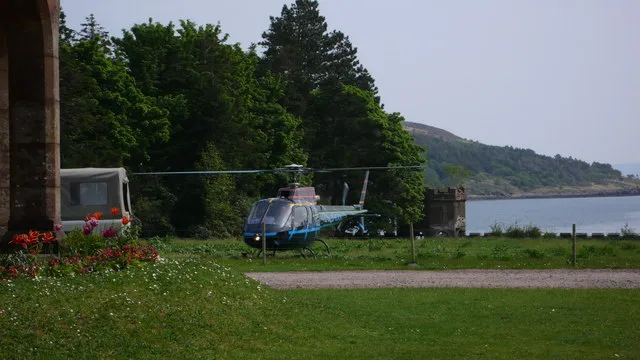
The most elegant landing site can become a difficult one if the dog is released too soon. Keep the dog on a lead from the moment the cabin door opens until the rotors have stopped and the crew has signalled that it is safe. Downwash, hot exhausts and moving vehicles are all hazards. At private estates and farm landing sites, assume livestock is nearby even if it is not visible. Use the lead, close gates and keep to paths. Clean paws before entering a car or hotel; a small towel and water bottle are more useful than they sound.
Hotels and country etiquette
Not every pet-friendly hotel is helicopter-friendly, and not every hotel that accepts dogs accepts them in the dining room. Confirm the policy in writing, including any cleaning fee, and request a ground-floor room where possible. Do not leave the dog alone in the room if it is likely to bark. Keep it on a lead in public areas and avoid the formal restaurant unless the hotel explicitly permits it. The aim is discretion: the dog should be a quiet companion, not a talking point for every other guest.
A sample city-to-country transfer
A workable pattern is a morning departure from London to a Cotswolds landing site, with a car meeting the aircraft for the short transfer to a pet-friendly country house. The dog travels in its carrier, has a walk on arrival and settles while lunch is served. The following day, the return is made by car or by a separately arranged flight, depending on the operator's schedule. The helicopter has done the hard part: it has removed the motorway, the traffic and the service-station stop from the animal's day.
The test of a good dog-friendly charter is not whether the dog is allowed on board. It is whether the animal arrives calm, the hotel is expecting it and the day still feels effortless for the passengers. Handled with that discipline, the discreet companion travels well.