The Friday Threshold: Helicopter Logistics for Boarding-School Weekends
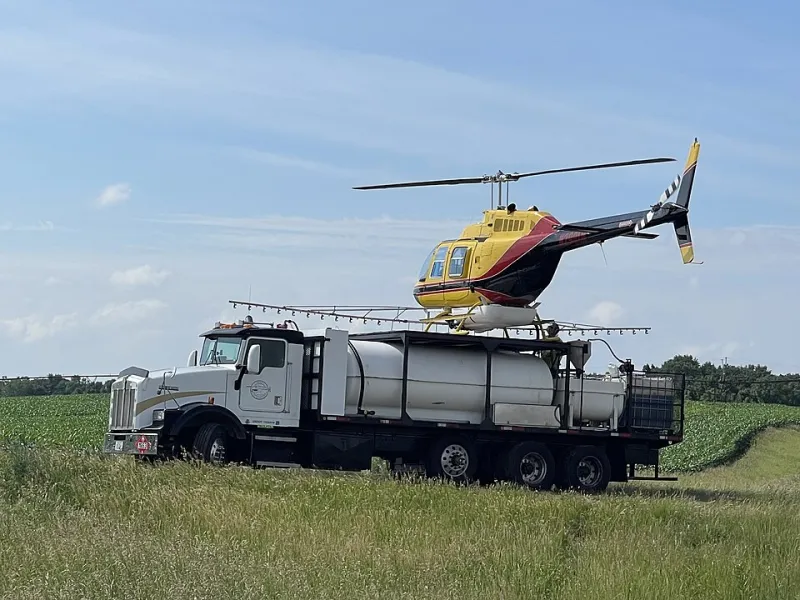
Photo: Richard N Horne, CC BY-SA 4.0, via Wikimedia Commons
The school exeat has a rhythm familiar to every boarding family: the final lesson, the trunk call, the dash to the car park, and then the long negotiation with Friday traffic. For those who already use charter for business or leisure, the helicopter offers something more valuable than speed alone — it restores the weekend to its proper proportions. The journey becomes a threshold rather than an ordeal.
Yet an exeat flight is not simply a city transfer with a younger passenger list. It requires a particular kind of planning: one that respects school timetables, accounts for British weather and recognises that discretion is often as important as efficiency. What follows is a practical framework for the 2026–27 academic year, written for families who value both punctuality and propriety.
The Exeat Window: Friday Afternoon in Practice
Most boarding schools publish their exeat and half-term dates well in advance, but the precise moment a pupil may leave is rarely a matter of public record. Some schools release pupils after games; others require attendance at prep or a housemaster’s briefing. The first task, therefore, is not to book an aircraft but to confirm the departure window with the school. A flight that departs at four o’clock is of little use if the pupil cannot leave before half past.
Helicopter charter compresses the journey itself, but it cannot compress the school’s routine. Sensible families build a buffer of thirty to forty-five minutes between the end of commitments and the proposed departure. That margin covers the walk to the landing site, the final farewells and the unpredictable business of finding a games kit that was last seen in a different building.
The return leg deserves equal attention. Sunday evening exeats often coincide with a school’s prep timetable, and landing too late introduces its own friction. A Sunday afternoon departure, timed to arrive before dusk, is generally kinder to pupils and staff alike. In winter, daylight is a genuine constraint rather than a decorative detail.
Landings Without Ceremony
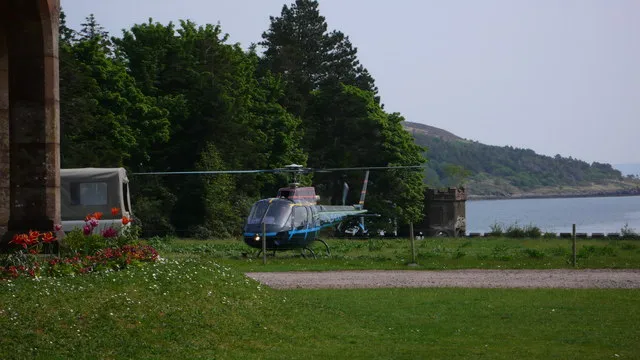
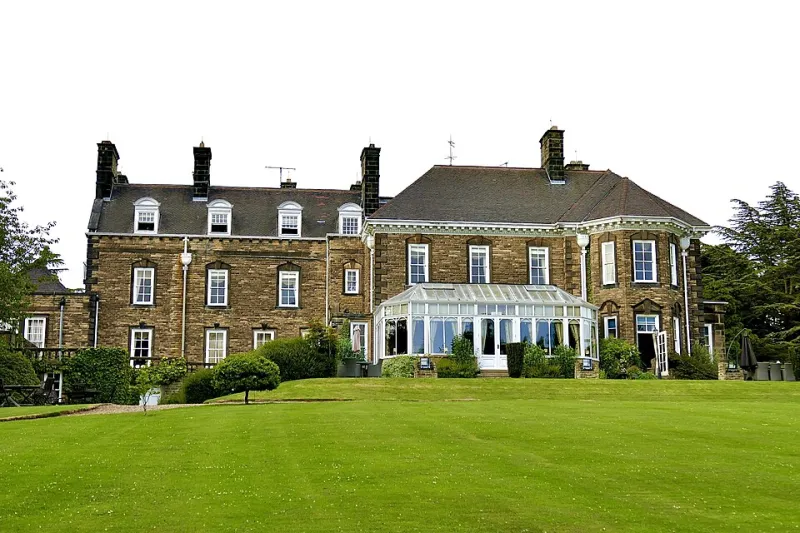
It is rare for a boarding school to permit a helicopter to land on its own grounds, and rarer still for that to be the most discreet solution. The better approach is usually a private estate or farm within a short drive of the school, arranged with the landowner’s consent and with proper attention to noise, livestock and neighbouring properties. Several leading schools sit within easy reach of established landing sites that operators know well.
Where no suitable estate is available, a licensed airfield can serve as the fallback. The drive from airfield to school may be longer, but the arrangement is simpler and less dependent on local goodwill. What matters is consistency: a landing site that works in June may be unusable in November, and a site that suits one family may not suit another. The site should be chosen for the whole academic year, not merely for the first exeat.
Discretion is part of the service. A helicopter arriving at a country estate is a visible event, and families are right to consider how it will be perceived. Advance notice to the school, a quiet approach path and a pre-arranged car on the ground all help to keep the operation unremarkable. The aim is not spectacle but smoothness.
Children, Luggage and the Small Print
Young passengers are not freight, and a charter operator will expect to know their ages, weights and any relevant medical information before the flight. Most helicopters carry children without difficulty, but supervision remains the responsibility of the accompanying adult. Headsets should be fitted properly, and younger children may need help with the intercom system. The operator will provide a safety briefing; parents should ensure it is heard rather than merely endured.
Luggage is the more common source of friction. Boarding trunks are not helicopter luggage. They should travel by road, either with a school-approved courier or with a family driver, while the aircraft carries soft bags, school uniform and the essentials for the weekend. Weight and balance calculations are not a formality; they are part of the flight plan. A generous allowance in a large twin-engine aircraft is still finite.
It is worth establishing a standard packing list for exeat weekends: one soft holdall per pupil, a named games bag if required, and nothing that cannot be carried comfortably from the landing site to the car. This small discipline saves time at both ends of the journey.
Sharing the Aircraft, Dividing the Cost
Helicopter charter is rarely cheap, but the exeat model lends itself to sharing. Two or three families with children at the same school, or at neighbouring schools within a short drive of one another, can divide the cost of a single aircraft. The savings are meaningful, and the social dimension is often welcome: pupils travel together, and parents share the burden of coordination.
Sharing requires a single point of contact. One family should act as the booking lead, collecting passenger details, confirming the departure window and communicating any changes to the operator. The landing site should be agreed by all parties, and the ground transfer should be sized to the group. Where families are travelling to different destinations after landing, the charter can be structured as a multi-leg itinerary, though the economics become less favourable.
Empty-leg opportunities can occasionally be harnessed for exeat weekends, particularly where an aircraft is repositioning after a Friday corporate charter. These are worth asking about, but they should not form the basis of a plan. The school calendar is fixed; empty legs are not.
Building a Term Card for 2026–27
The most effective exeat strategy is a term card: a single document listing every relevant date, the confirmed departure window, the landing site, the ground transfer and the passengers. It should be prepared before the academic year begins and reviewed at the start of each term. Schools occasionally change timetables, and a flight plan that was perfect in September may need adjustment by November.
Book early. The Friday afternoon window is the busiest part of the charter week, and aircraft with the right range and seating configuration are not infinite. A repeatable arrangement — the same operator, the same landing site, the same ground handler — reduces both administrative effort and the risk of surprise. It also gives the operator a clearer picture of the family’s needs, which is useful when weather threatens.
The Weather Clause
Every UK charter plan requires a contingency. Helicopters are capable in conditions that would ground light fixed-wing aircraft, but they are not immune to low cloud, high winds or freezing fog. The operator will make the go/no-go decision, and that decision should be respected. A sensible family keeps a rail or road alternative in reserve for the most important weekends, and builds enough flexibility into the schedule to absorb a delay of two or three hours.
The point of the helicopter is not to defy the British climate but to make the best use of the hours it permits. On a clear Friday afternoon, the flight turns a four-hour motorway crawl into a forty-minute interval of countryside and sky. On a poor one, the plan reverts to the car — and the weekend remains intact.
For families who already understand the value of charter, the exeat is a natural extension of that discipline. It rewards preparation, discretion and a willingness to share. Above all, it returns time: time at the school gate, time at the dinner table, time that would otherwise be spent in lane three. In the 2026–27 academic year, that is a worthwhile calculation.