Arriving Unannounced: The Helicopter Route to Britain’s Private Clubs
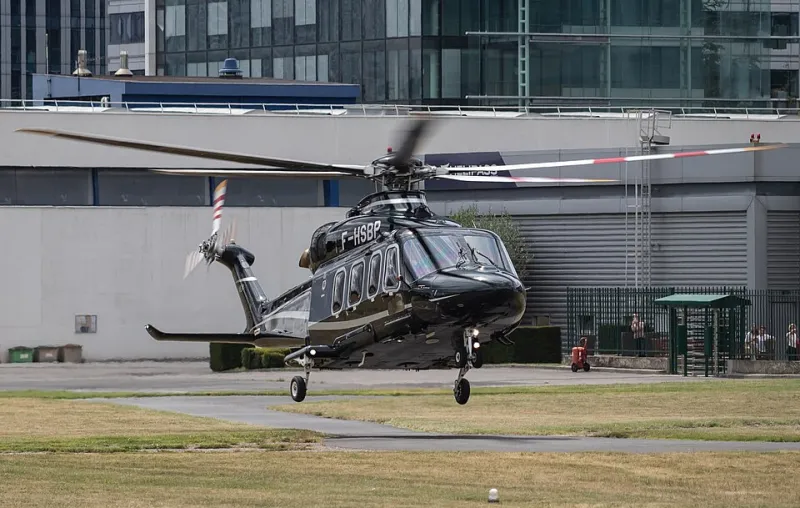
Photo: Hermann Luyken, CC0, via Wikimedia Commons
There is a particular kind of British arrival that values restraint over spectacle. It is not the sweeping entrance, nor the conspicuous display, but the quiet transition from aircraft to car to club threshold, achieved without disturbing the rhythm of a dining room or the stillness of a country estate. For the discerning traveller, a helicopter can serve precisely this purpose: it compresses distance without demanding attention.
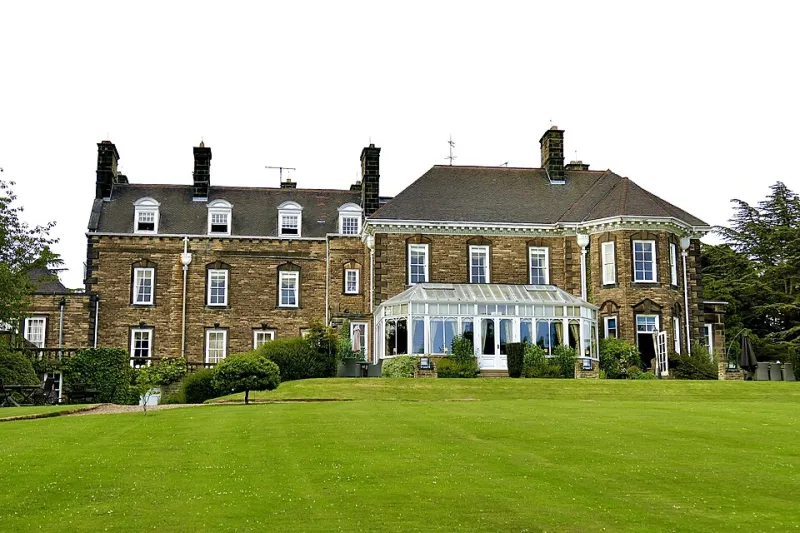
In 2026, that proposition is especially relevant. The most sought-after private clubs and country retreats sit beyond the convenient reach of central London, yet they remain close enough for a day or a weekend by air. The task is not simply to charter an aircraft, but to design an arrival that respects the club’s own codes, its neighbours and its landscape.
The London Departure
Most private-club journeys begin at London Heliport, Battersea, where the formalities are familiar and the onward road transfer is predictable. Rooftop departures are possible in limited circumstances, but they remain exceptional and subject to building consent, safety case and operator approval. For a club in Mayfair or St James’s, the helicopter is rarely the final mile; it is the first, followed by a pre-arranged chauffeur car.
The better operators build the day backwards. A lunch at 1pm dictates a landing time, which dictates a departure slot, which in turn accounts for weather, air traffic and the walk from car to club. The aim is a margin of quiet, not a sprint. A member should arrive composed, with luggage already accounted for and the aircraft already receding from memory.
Landing at the Country Outpost
Soho Farmhouse in Oxfordshire and Babington House in Somerset are the obvious reference points for the members’ country circuit, but neither should be treated as a public heliport. Landing permissions must be established in advance, in writing, with the estate or landowner. The operator will usually identify a suitable farmland or private estate site within a short drive, or a nearby licensed airfield where the aircraft can remain while the day unfolds.
This is not a matter of convenience alone. Livestock, tenants, event schedules and local sensitivities all form part of the calculation. A considerate flight plan avoids peak arrival times, respects noise-sensitive areas and ensures that the aircraft does not become the afternoon’s principal topic. Where a club has an established protocol, it should be followed precisely; where it does not, the club secretary should be consulted before any landing request is made.
The Etiquette of the Threshold
Membership etiquette begins long before the aircraft lifts. Guest names should be submitted in advance, dress codes observed and arrival times respected. Photography should be avoided unless expressly permitted. Telephones should be silent, luggage discreet and conversation about the aircraft kept to a minimum. The helicopter is a means of travel, not a subject for the table.
It is equally important not to ask club staff to manage aviation matters. The charter operator should coordinate with the landowner, the chauffeur company and, where appropriate, the club’s secretary. The member’s role is simply to arrive well. This distinction preserves the club’s atmosphere and protects the member from the appearance of using the club as a stage.
Chauffeur and the Seamless Transfer
The road transfer is where a good itinerary reveals itself. A pre-booked chauffeur should meet the aircraft, handle luggage and deliver the member to the club without a flurry of calls or uncertain directions. For weekend visits, a single point of contact is preferable: one driver, one vehicle and one schedule that can accommodate a change of plan.
Electric vehicles are increasingly appropriate for short rural transfers, though practical range and luggage capacity must be considered. Cars should not idle outside a club entrance, nor should they arrive too early. The best transfers feel almost uneventful, which is precisely the point.
A Day or a Weekend
A day itinerary might begin with a mid-morning departure from Battersea, a landing in Oxfordshire before noon, a short drive to the club and a leisurely lunch. The return should be planned before dusk, particularly in winter, with a weather contingency and an alternative landing site held in reserve. A weekend itinerary allows a Friday afternoon arrival, overnight parking at a licensed airfield and a Sunday return that avoids the worst of the road traffic.
In either case, the charter operator should provide a clear brief: timings, landing permissions, chauffeur details, luggage arrangements and a named contact. The member should carry nothing that cannot be discreetly managed, and should expect the aircraft to be positioned for the return well before it is needed.
The Quiet Calculation
The private-club journey is not defined by the aircraft alone. It is defined by the absence of friction: the permission secured, the car waiting, the table held, the return arranged. For the UK traveller who values privacy and precision, that is the real luxury. The helicopter simply makes it possible to arrive unannounced, and to leave the same way.