Malting by the Sea: An Airborne Itinerary for Scotland’s Coastal Whisky Houses
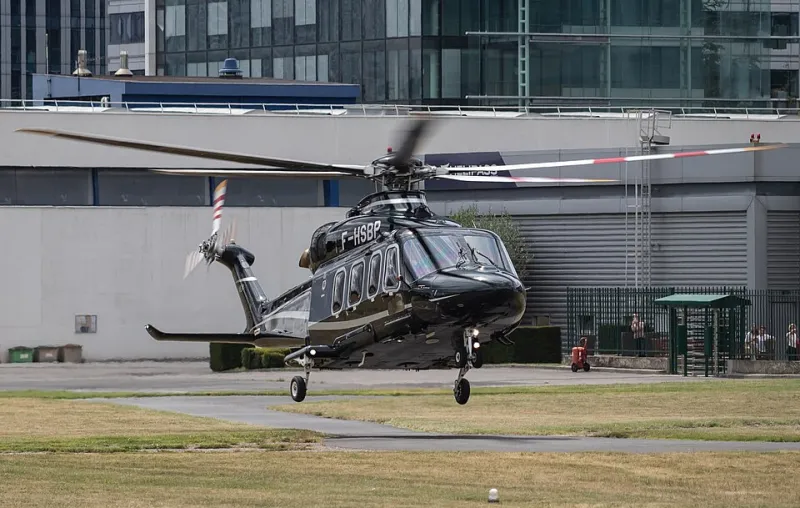
Photo: Planespotter1, CC BY-SA 4.0, via Wikimedia Commons
Scotland’s maritime distilleries have long made a virtue of remoteness. The sea brings tempering air, the road brings effort, and the visitor arrives with a sense of having earned the glass. A helicopter removes the effort without removing the romance, provided the itinerary is designed with as much care as the dram. The following is a considered framework for a 2026 day or weekend among two or three coastal whisky houses, balancing atmosphere with the practicalities of landing permissions, weather and ground movement.
Begin with Fewer Stops
For a single day, resist the temptation to collect distilleries as others collect labels. Two is elegant. Three is possible only when the sites sit close together and the timings are generous. Islay’s south coast, with its concentration of celebrated names, lends itself to a morning tasting and an afternoon warehouse visit. Campbeltown offers a compact alternative, with the added pleasure of arriving over the Mull of Kintyre. Mull, Skye, Orkney and Harris each reward a longer stay; attempting any of them as a day return from southern England is to mistake movement for travel.
A weekend allows two bases and a more civilised pace. One might pair an Islay day with a second day in Campbeltown, or use a Highland hotel as a fixed base for a Mull and Skye programme. The guiding principle is not how many distilleries can be reached, but how few can be visited without hurry. In 2026, the most rewarding itineraries will be those built around fewer stops and longer stays.
The Shape of an Airborne Day
The day should begin at a private helipad, a regional airport or an estate with an agreed landing area. Aircraft selection matters: range, luggage capacity and passenger comfort all shape the plan. A London departure to the Scottish islands may require a fuel stop depending on the type, and that stop should be written into the schedule rather than treated as an inconvenience. The first tasting is best placed late in the morning, after the rotor has settled and the ground transfer has been made. Lunch follows, then a second visit, then the return or the onward transfer to an overnight base.
The pilot and the ground handler should work from a single running order. This is not a question of micromanagement, but of courtesy: distilleries arrange private tastings and warehouse access around fixed times, and a late arrival has a cost beyond the schedule. A discreet chauffeured car should meet the aircraft at each landing site; the last mile is rarely the place for improvisation.
Permission, PPR and the Last Mile
Rural landing is not a matter of choosing a pleasing field. Every site requires landowner consent, a site survey, insurance and attention to noise abatement and local sensitivities. Distilleries with their own helicopter landing areas will often require prior permission required, or PPR, and may impose time windows. Others are better served by a nearby airfield or private estate, with the distillery visit beginning by road.
The charter operator should manage these permissions, but the charterer should ask for confirmation in writing. A landing fee is only one part of the equation; indemnities, local authority conditions and environmental considerations may also apply. The most polished itineraries allow the distillery team to receive guests at an agreed point rather than at the edge of an improvised landing area.
Weather: The Variable That Governs
Scotland’s west coast is beautiful precisely because its weather is not entirely tame. Sea fog, low cloud, gusting winds and short winter daylight can all affect a helicopter programme. Most charter flights operate under visual flight rules, and the decision to fly rests with the operator and the pilot. A luxury itinerary is not one that ignores this reality; it is one that builds a buffer around it.
For a day trip, a flexible date and a weather contingency are essential. For a weekend, an extra night transforms the risk into a tolerable delay. The alternative should be considered in advance: a road transfer, a rail connection or a revised order of visits. Passengers should also understand that a tasting schedule may need to be adjusted if the return flight is brought forward for weather.
The Private Tasting and the Warehouse
A private tasting should be exactly that: a seated or standing tasting arranged for the party, preferably with a member of the distillery team who can speak to the house style and the casks at hand. Warehouse access is the more atmospheric privilege, with cool air, damp stone and the scent of maturation. It should be requested well in advance and confirmed in writing, together with any limits on group size and photography.
Dress for the warehouse rather than the helicopter. Warm layers are sensible, and footwear should cope with uneven ground. Where a tasting takes place before the final flight, passengers should confirm the operator’s policy on alcohol and use spittoons where offered. The pilot will not drink, and the party should respect the separation between hospitality and operation.
Lunch and the Overnight Stay
Lunch should be a destination, not an afterthought. A country house hotel, a seafood restaurant overlooking a loch or a private dining room arranged by the distillery can all serve the purpose. The meal should be light enough for the afternoon tasting and long enough to feel like part of the day rather than a pause in it. Dietary requirements should be shared with the venue in advance.
For a weekend, the overnight stay is part of the itinerary. A hotel with its own grounds, a private house or a well-run country retreat will allow the party to slow down after the final tasting. The following morning can begin with a second distillery or a coastal walk before the return flight, depending on the weather and the appetite for further exploration.
A Checklist for 2026
- Define the party, the purpose and the preferred pace before selecting distilleries.
- Ask the operator to confirm landing permissions, PPR arrangements and ground transfers.
- Request private tastings and warehouse access in writing, with timings and group limits.
- Build in a weather buffer and identify a viable alternative for each day.
- Confirm the operator’s policy on alcohol consumption before the final flight.
- Arrange lunch and overnight accommodation as part of the charter, not after it.
- Allow the distillery to receive the party properly; the last mile should be chauffeured.
The water of life is, in the end, a matter of time and place. A helicopter can shorten the journey, but it cannot manufacture the stillness that makes a warehouse tasting memorable. The finest itineraries use speed only to protect the slower pleasures: the sea air, the low light, the patient explanation of a cask and the sense that one has arrived somewhere worth arriving at.