The Quiet Calculus of the Go/No-Go: Weather Decisions on a UK Helicopter Charter
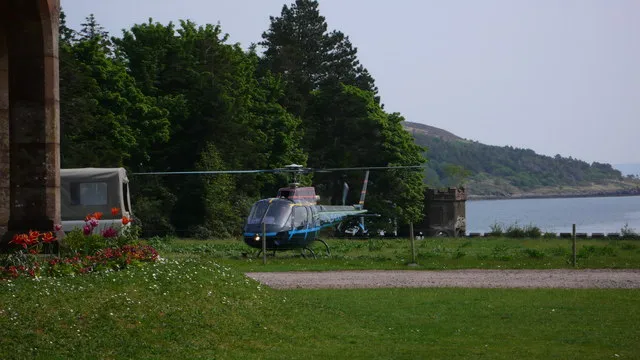
Photo: Calum McRoberts, CC BY-SA 2.0, via Wikimedia Commons
In Britain, weather is rarely merely scenery. It is a participant in the day, particularly from late autumn into winter, when fog settles in river valleys, wind funnels between buildings and daylight closes in by mid-afternoon. For the discerning traveller, the appeal of a helicopter charter lies partly in its ability to rise above such matters. The more accurate truth is that a well-run charter does not defy the weather; it interprets it carefully, plans around it quietly and makes a decision that protects both the occasion and the people travelling.
The forecast is only the opening line
A passenger may see a grey sky and a light drizzle and wonder why a flight is delayed. An operator sees a series of separate questions. What is the cloud base? How far can the crew see? Is the fog forecast to lift, or merely to thin? What are the wind speeds and, more importantly, the gusts? Is there any risk of icing at the planned altitude? Will the winter sun be low enough to create glare on approach?
The decision begins with official aviation forecasts, observed conditions and notices to airmen, but it does not end there. Good operators combine those sources with local knowledge: how fog behaves at a particular private estate, how wind curls around a city helipad, how quickly visibility can fall on a coastal route. The luxury passenger need not master the terminology. It is enough to know that the call is made on operational evidence rather than optimism.
What the crew is actually weighing
Fog is the most familiar intruder in the UK charter calendar. Radiation fog can form overnight and linger into the morning; coastal fog can arrive without much warning; valley fog can sit below an otherwise clear sky. For a helicopter operating under visual flight rules, visibility and cloud base are not abstract figures. They determine whether the route can be flown legally and comfortably, and whether an approach to a private landing site can be made without compromise.
Wind is the second consideration. A steady breeze is one matter; gusting, crosswinds and turbulence in built-up areas are another. The direction of the wind relative to a landing site can matter as much as its strength. Some sites are sheltered and forgiving; others are exposed and demand a narrower margin. Winter light adds a further layer. Short days mean less room for delay, and a low sun can turn a straightforward approach into a demanding one. Cold air can improve helicopter performance, but it can also bring icing risk and slippery surfaces on the ground.
Then there are the details that passengers rarely see: airspace restrictions, temporary notices, the weight of luggage and passengers, fuel requirements and the suitability of the chosen landing site. Each is routine. Together, they form the quiet calculus behind a decision that must be both safe and sensible.
Contingencies are designed, not improvised
A polished itinerary does not pretend that weather will behave. It assumes that it may not. For a city transfer, that might mean holding a first-class rail ticket or a chauffeur on standby, or scheduling the flight earlier to leave a generous buffer before a dinner, meeting or performance. For a race day or sporting occasion, it may mean arriving the evening before or identifying a secondary landing site within a short drive of the course. For a scenic flight, it can mean re-routing to a clearer part of the country or accepting a shorter window at lower altitude.
The best contingencies are agreed before the day, not discovered in the moment. A single point of contact keeps communication calm. Decision windows are set: a time by which the operator will confirm, defer or cancel. Options are presented rather than ultimatums. The passenger is told what is likely, what is possible and what would need to change. This is not administrative fuss. It is the practical expression of discretion.
The passenger's part is simpler than it seems
Travellers can help by being candid about what matters. Is the arrival time fixed, or is the occasion flexible? Is there a hard deadline such as a wedding, a tee time or a curtain? How much luggage is involved? Are there mobility considerations? A good operator will ask these questions early, and a good passenger will answer them plainly. What is less helpful is pressure applied to a crew who are already balancing safety against service. In helicopter charter, the captain's authority is not a bureaucratic formality; it is the foundation of a calm day.
It is also reasonable to ask how the operator will communicate. Will there be a call the evening before? A confirmation on the morning? A final decision at a specified hour? The answer should be clear, without a stream of anxious updates. Luxury, in this context, is the absence of noise around the logistics.
When the answer is no
Sometimes the correct decision is not to fly. This can feel disappointing, particularly when a special occasion is in view, but a no-go call is not a failure of service. It is evidence of operational maturity. The alternative, a flight made in marginal conditions, is not a luxury worth having. Reputable operators will explain the decision in plain terms, help rearrange the day and, where appropriate, apply their published cancellation or rebooking terms without drama.
A cancelled flight is inconvenient. A compromised one is unacceptable. The distinction matters, and it is one that discerning travellers tend to understand once the reasoning is explained.
A realistic expectation for the 2026 winter season
Britain in winter can offer crystalline flying days and sudden blankets of low cloud within the same week. The sensible expectation is not guaranteed departure but disciplined judgement, clear communication and a plan that preserves the purpose of the journey. When a charter is arranged well, the weather call becomes part of the service rather than an interruption to it: quiet, considered and made with the occasion firmly in mind.