The Last Hour at Altitude: A Helicopter Plan for New Year’s Eve 2026
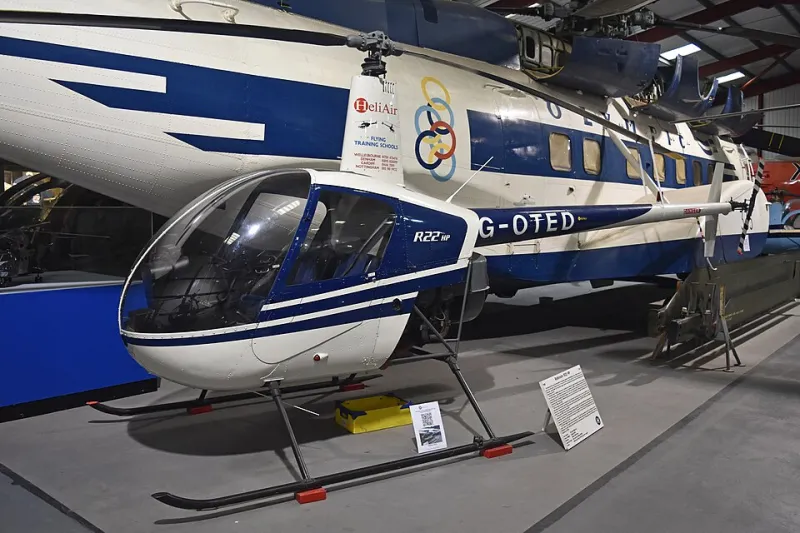
Photo: HawkeyeUK, CC BY-SA 2.0, via Wikimedia Commons
New Year’s Eve is one of the few nights on the British calendar when the sky itself becomes the principal entertainment. For the traveller accustomed to arriving by road, rail or river, a helicopter offers a different relationship with the evening: not immersion in the crowd, but a considered vantage above it. The appeal is less about spectacle than about composure — the final minutes of 2026 observed from altitude, with the city or coast laid out below and the return journey already arranged.
A successful charter, however, is made well before 31 December. The midnight moment is brief, the airspace is busy and the British weather is seldom cooperative. A charter arranged through Phoenix Helicopter is therefore planned around permissions, timing and contingencies rather than the fireworks alone.
Choosing the Display, Not the Crowd
Central London remains the obvious draw. The Thames display is internationally recognised, and the temptation is to assume that a helicopter should hover directly above it. In practice, the capital on New Year’s Eve is among the most constrained environments in which to fly. Event airspace restrictions, crowd density and the limited number of licensed landing sites mean that the most sensible arrangements place the aircraft on a carefully approved orbit or at a landing site outside the immediate event footprint, with a chauffeured transfer completing the evening.
For many parties, the better choice is a display with more room around it. Edinburgh’s Hogmanay offers a dramatic setting, though winter weather can be demanding. Coastal towns from Bournemouth to Brighton, and from Liverpool to Newcastle, stage displays with airfields or open ground nearby. Country-house hotels and private estates occasionally host their own fireworks, providing a controlled perimeter and established landing areas. The question is not which display is largest, but which can be approached safely, legally and without surrendering the evening to traffic.
The Night-Flight Equation
A helicopter at night is not simply a day charter after dark. The pilot must hold the appropriate night qualification, the aircraft must be suitably equipped and the operator must be satisfied that the route, weather and alternates meet the required minima. Passengers should expect a fuller briefing than on a daylight scenic flight: lighting, emergency procedures and the discipline of moving around the aircraft on a dark ramp.
Timing is decisive. A departure shortly before midnight may sound romantic, but it leaves no margin for a delayed slot, a change in wind or a late arrival at the landing site. The more reliable pattern is to dine early, transfer to the aircraft, become airborne in good time and reach the viewing area before the final ten minutes of the year. The midnight display itself may last only a quarter of an hour; the flight plan should protect the hours either side of it.
Permissions and the Ground Beneath
Landing permissions are the quiet backbone of any New Year’s Eve charter. A private estate, hotel or farm field requires the landowner’s prior permission, often through a formal prior permission required arrangement. A licensed aerodrome or heliport will have its own procedures, curfews and handling charges. Local authorities and event organisers may impose additional restrictions, and the pilot will liaise with air traffic control and the relevant airspace managers.
No reputable operator should promise a landing inside an event footprint or a hover directly over a crowded display. The responsible approach is to agree a site that is safe, lawful and practical, then to treat the display as the view from the aircraft rather than the aircraft as part of the display. Passengers should also expect a short car journey at one or both ends of the flight; the helicopter removes the motorway, not every mile.
Weather and the Alternative Plan
December in Britain offers low cloud, fog, strong winds and the occasional sharp frost. Any New Year’s Eve flight therefore needs a weather decision point, typically 24 to 48 hours before departure and again on the day. A good charter agreement will set out what happens if the flight cannot proceed: a chauffeured transfer, a rail alternative or a rebooking. Fireworks themselves can be cancelled for wind or visibility, so the evening should not stand or fall on a single spectacle.
The most discerning arrangements include a ground plan that is enjoyable in its own right. A country-house dinner, a coastal hotel and a private gathering are all pleasant without a rotor turning. If the weather cooperates, the flight elevates the evening; if it does not, the evening remains intact.
The Quiet Luxury of Arriving Above
The final pleasure is one of removal. From altitude, the crowds become patterns of light, the traffic a slow ribbon and the fireworks a private exhibition rather than a scrum. There is no queue for the train, no wait on a cold embankment and no uncertainty about the route home. There is only the aircraft, the pilot and the last hour of 2026 passing beneath the skids.
For the traveller who values composure as much as celebration, that is the real luxury: to see in 2027 above the noise, and to land afterwards with the evening already resolved.