Cider at Altitude: A Harvest-Day Route Through Herefordshire and Somerset
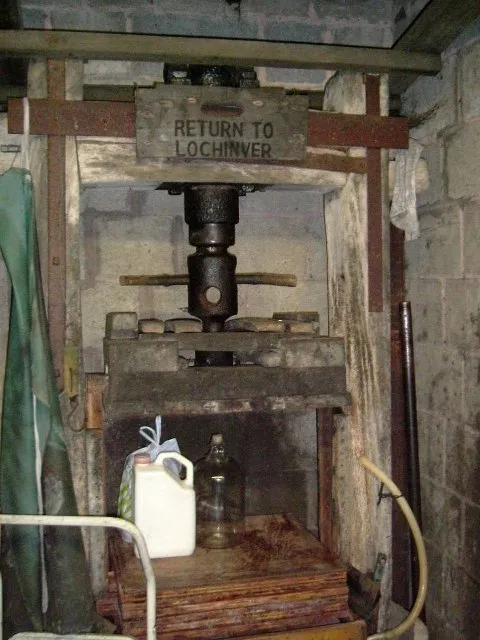
Photo: Glyn Baker, CC BY-SA 2.0, via Wikimedia Commons
Britain's cider country is not a single place. It is a collection of orchards, farmyards, press houses and long tables, mostly in Herefordshire and Somerset, where the year is measured in blossom, fruit and fermentation. A helicopter day through this landscape should not be a pub crawl with rotors. It should be a slow, well-mannered route through working farms, with enough time to taste, talk and walk between the trees.
Choosing the window
There are two obvious seasons. Blossom comes in late April and May, when the orchards are at their most photogenic and the air is still cool. Harvest follows in September and October, when the fruit is picked, pressed and the farmyards are busy. By mid-November the 2026 harvest is largely gathered, but the cider year is still readable: the presses have slowed, the new season is in tank and the tasting rooms are quieter. Late autumn is a good time for a considered visit, provided the weather and landing sites cooperate.
Landing near working farms
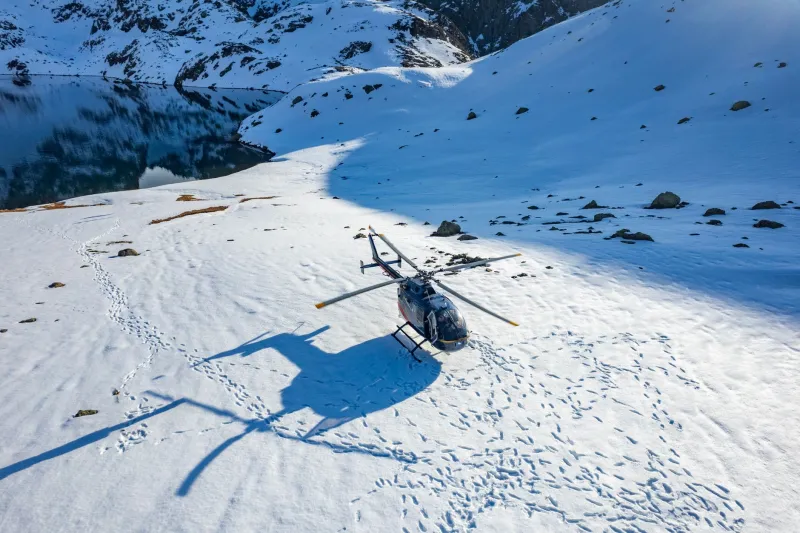
A farm is not an airfield. Permission must be sought well in advance, and the landing site should be agreed with the farmer or estate manager rather than assumed from a map. Avoid soft ground, standing crops, orchards with low branches and fields with livestock. Downwash can scatter fruit, lift straw and unsettle animals. Keep the party small, arrive when expected and follow the farm's instructions on vehicles and gates. Public footpaths crossing a field do not give permission to land; they simply remind you that the site is shared.
A route through two counties
A sensible route begins west of London and uses Herefordshire as the first stop. The aircraft can land at a private site near Ledbury or Much Marcle, where a car meets the party for the short transfer to an orchard and press house. The visit should be modest in scale: a walk among traditional trees, a look at the press and a tasting of perhaps three or four ciders and a perry. Lunch follows at a country table, either at the farm or at a nearby pub with a serious interest in local produce.
The second leg continues south into Somerset, perhaps towards the Martock and Ilminster area, where orchards sit close to the Levels. A second maker can offer a contrasting style: drier, sharper, more aromatic, or perhaps a farmhouse cider with the tannin and bite that supermarket bottles rarely capture. The day can end at a Somerset landing site with a car onward to a hotel, or at a rail station for the return to London. The point is not to collect makers. It is to see how one landscape differs from another.
Tasting etiquette at altitude
The pilot does not drink. That is not a detail; it is the foundation of the day. For passengers, tasting should be measured. Use small measures, take water, eat something and use the spittoon if it is offered. Ask before taking photographs inside a press house, and do not assume that a working farm is a visitor attraction. Buy a bottle or two if you have tasted well; it is the simplest courtesy. Keep to the agreed time, because the aircraft and crew are on a schedule even when the day feels leisurely.
The country lunch
Cider country rewards a long lunch, but the helicopter day requires a sensible one. Book ahead, explain the timing and choose a table that is not rushed. A farmhouse lunch of soup, bread, cheese, ham and pickles is often more appropriate than a formal tasting menu. If the party includes non-drinkers, say so in advance. The best meals in this landscape are not performances; they are extensions of the orchard.
After landing
Finish the day somewhere that allows the helicopter to leave cleanly and the passengers to continue without fuss. A hotel with a car waiting, or a station with a reliable train, is better than a remote field at dusk. Send luggage ahead, keep the final landing site simple and allow the cider to be the memory rather than the logistics.
The orchard run works because it is not hurried. A helicopter can connect Herefordshire and Somerset in a way that a car cannot, but the aircraft should serve the landscape, not dominate it. The best days end with mud on your shoes, a bottle in the bag and the sense that you have understood, for an afternoon, how cider is made.