Low Sun, Ancient Stones: A Solstice Day by Helicopter
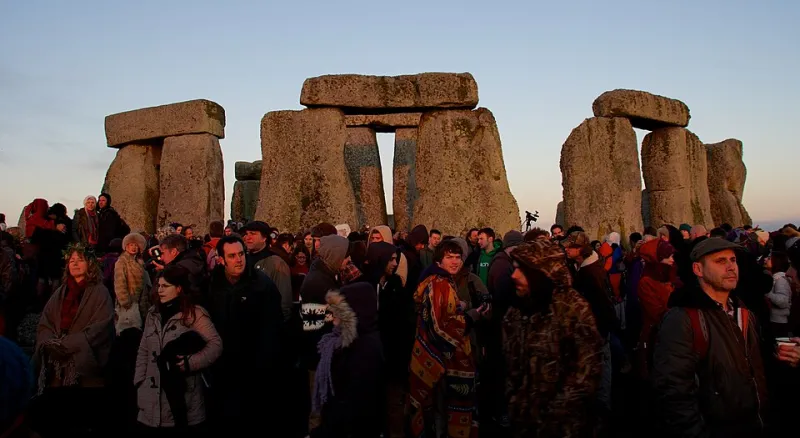
Photo: Photograph by Mike Peel (www.mikepeel.net)., CC BY-SA 4.0, via Wikimedia Commons
December in Britain is a month of full diaries and short daylight, and the two are rarely reconciled gracefully. The winter solstice, falling on 21 December in 2026, offers a quieter alternative: a single day spent above ancient landscapes in low, raking light, with a long lunch in the country and a return home before the evening's obligations begin. For the traveller who has already attended the carol services and the Christmas parties, it is a markedly different way to close the year.
The Case for the Shortest Day
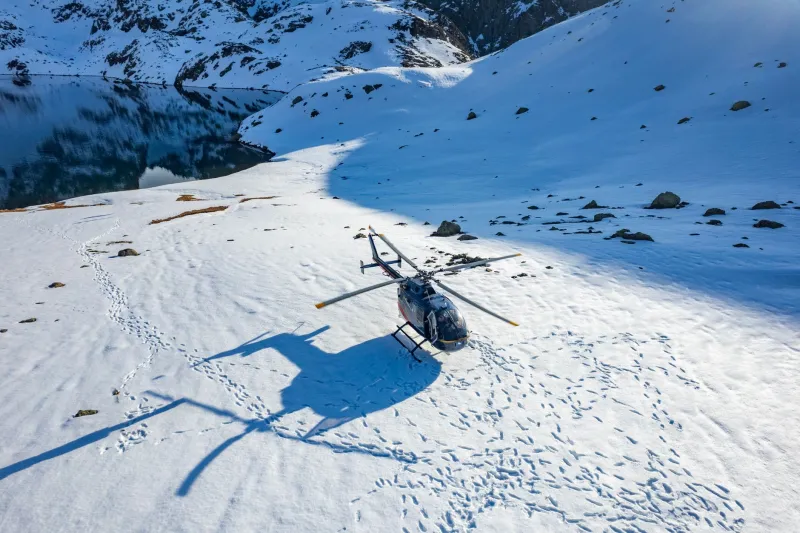
There is a particular quality to British light in the final week of December. The sun sits low enough that the land is thrown into relief, and hedgerows, earthworks and stone circles that read as flat in summer become legible from the air. A helicopter is unusually well suited to this. Cruising at a thousand feet or so, one sees the whole of a ceremonial landscape rather than a single monument, and the short flying legs between sites leave ample time on the ground.
The solstice also imposes a discipline that many charters lack. With perhaps seven and a half hours of usable daylight, every element of the day must be sequenced with care. That constraint, handled well, produces an itinerary of unusual calm.
Three Compass Points
The choice of landscape shapes the entire day, and the three principal options differ sharply in cost, distance and pace.
Wiltshire is the most accessible. A morning departure from a London heliport or a Home Counties operating base puts Stonehenge and Avebury within easy reach, and the two can be paired with a third site such as Silbury Hill or the West Kennet Avenue in a single airborne circuit. The advantage here is flexibility: the day can begin at first light and conclude with a late lunch, leaving the aircraft free to return before dusk.
Orkney is the more ambitious proposition. The chambered cairns of Maeshowe and the standing stones of Stenness and Brodgar constitute one of Europe's great prehistoric landscapes, and seen from the air in winter they carry a bleakness that no summer visit can match. A day charter to Orkney from southern England is a long one, and many clients prefer to position north the previous evening. It rewards the effort, but it should be planned as an expedition rather than an outing.
The Welsh uplands offer a middle path. The Preseli hills, the source of Stonehenge's bluestones, and the quieter moorland sites of mid-Wales suit a contemplative day, with landing options on private farmland and a country lunch at a small hotel. It is the least crowded of the three and, for many, the most atmospheric.
The Matter of Permission
No responsible operator lands beside a scheduled monument. Stonehenge and Avebury are protected, and the surrounding land is subject to its own constraints; the helicopter's role is to overfly and to land at an agreed private site nearby, not to deliver passengers to the stones themselves. In practice this means a farm strip, an estate park or a hotel lawn with written landowner consent, arranged well in advance and confirmed again in the days before the flight.
Orkney requires particular care. The archaeological heart of the islands is tightly clustered, and the weather can close in quickly. A local operator with knowledge of the islands is worth the premium, and any landing near a protected site should be discussed directly with the relevant heritage body. The same applies in Wales, where common land and access agreements add a layer of administration. None of this is prohibitive; it merely requires that the charter be briefed as a planned day rather than a spur-of-the-moment flight.
Timing the Light
On the solstice, sunrise in southern England falls shortly after eight and sunset shortly before four. That leaves a generous but finite window. A sensible structure is to be airborne for the first hour of low sun, land mid-morning for a site visit on foot, reposition over a second landscape around midday, and sit down to lunch at half past one.
Dusk is the more affecting hour. The light turns copper and then violet, and the stones and earthworks lose their detail while gaining in atmosphere. A return leg flown in the last of the civil twilight is one of the finer experiences available to a charter passenger, but it requires an aircraft and crew cleared for the conditions, and a departure point that does not depend on daylight. For most clients this means a night-rated operator and a home base with instrument approaches.
Weather and the Contingency Plan
December is the least forgiving month in the British flying calendar. Fog, low cloud, and the risk of airframe icing can close an airfield with little warning, and the short day leaves no room for a delayed start. A charter booked for a single date in late December is therefore a gamble unless it is structured as a flexible booking.
The practical answer is to hold two or three candidate days across the solstice week and to accept the operator's judgment on the morning. Reputable firms will not press on into marginal conditions, and the wise client treats the go/no-go decision as part of the experience rather than an inconvenience. It is also worth asking, at the point of enquiry, what the operator's rebooking terms are for weather and whether the aircraft can be held on standby.
A Table Set for the Season
The day benefits from a deliberate pause. A fireside table at a country house hotel, booked for half past one and held without hurry, gives the itinerary a centre of gravity. The menu need not be elaborate: game, root vegetables, a good pudding, and a glass of something appropriate to the season. What matters is that the room is quiet, the service unhurried, and the departure time elastic enough to accommodate a slow lunch.
In Wiltshire, several manor hotels fit the brief. In Wales, a small upland inn serves the purpose admirably. In Orkney, the choice is narrower but the hospitality is no less generous, and a late lunch of local seafood and Orcadian beef is a fitting conclusion to a day spent among the islands' oldest stones.
The Return
By four o'clock the light is going, and the aircraft turns for home. A return in the dark, with the lights of towns and motorways passing below, has its own quiet satisfactions, particularly when the day has been spent among landscapes that predate them by millennia. The festive calendar will still be there tomorrow. For one day, at altitude, it need not intrude.